Attorneys Serving
Southeastern Michigan
Since 1982
Southeastern Michigan
Since 1982




We know you’re a good landlord, but even the best and the most careful landlords can end up with a bad tenant, or struggle with a tenant because of a poor lease agreement, Michigan’s economy, poor background checks, etc.
Our real estate attorneys have been helping landlords throughout Michigan with purchase agreements, leases, and other tenant related legal issues for over 30 years now.
There are many reasons to evict a tenant in Michigan, some of which are listed below:
Our attorneys have represented many local landlords who find themselves in this particular situation. Or, you may have purchased a property, or properties, for back taxes and you need to get the current occupants out.
If you are a landlord with a tenant in Michigan who is not paying, we will be happy to help.
Call our landlord tenant attorneys to help you today! 734-743-8288.
Our attorneys send the tenant(s) a Demand for Possession in an attempt to get them to pay the rent that’s due. In many tenant cases, that is all that is necessary to get a tardy tenant to pay.
If the tenant does not comply with the Demand for Possession, our lawyers file a Complaint in the District Court to terminate their tenancy. Our landlord attorneysthen appear in court on your behalf, and get a judgement of possession from the judge terminating their tenancy. The judge typically orders the tenant to move out within 10 days
If the tenant(s) don’t move out on their own, our attorneys will go back to court for a Writ of Eviction. We provide you with the Writ of Eviction and we can help you make the arrangements to move the tenant(s) out.
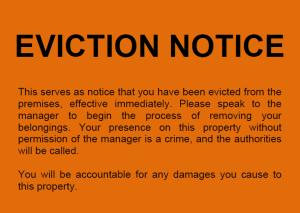
If you would like more information about landlord tenant issue in Redford, Livonia, Detroit, Dearborn, or anywhere else in Michigan, visit the LandLord Tenant Act page from the State of Michigan’s Legislature.
In the landlord tenant act, landlords & tenants can find the answers to run of the mill questions regarding tenants issues, leases, security deposits, subleasing provisions, and evictions notices. Our landlord tenant lawyers are experts in this document.
If you don’t feel like reading over 65 pages about landlord tenant issues in Michigan or can’t find the time to read the landlord tenant act, just give our landlord tenant attorneys a call. They’ll be happy to help you.
Call Us with your landlord tenant questions 734-743-8288.
Many people are buying properties on back taxes, but are having problems evicting the current occupants, our lawyers can help with that too. It is a similar process to evicting a tenant, but requires eviction pleadings.
Our attorneys will send them a Demand for Possession. This states that they no longer own the property and that they must move out. If they don’t move out voluntarily at that point, our real estate lawyers file a Complaint for Possession.
Our attorneys will then appear in court for you; obtain the Judgment for Possession and, if necessary, have the Court issue a Writ of Eviction so that we can help you move the current occupants out.
As a landlord, you are entitled to keep their deposit for the rent owed to you. You are also entitled to hold them liable for the rent due under the lease until you are able to re-lease the property.
You have to try your best to re-rent the property at the same amount, but if you have to rent it for less money, your past tenant is responsible for the rent they would have owed you until the end of their lease.
Don’t forget to comply with Michigan law for landlords by sending a statement to his current, or last known, address, within 30 days of the day you discovered he moved out, letting him know that you are retaining his deposit for unpaid rent. You should also let him know that you are holding him responsible for the rent due under the lease until you are able to re-lease the property.
Once you find a new tenant to re-lease the property, or his lease ends; whichever is sooner; you should send him a statement for all monies due under his lease. If the past tenant does not pay, you can file suit against him in the District Court where he is then residing.
You may include a late fee in the form as long as you have a provision in your lease allowing you to charge a late fee, and that late fee is now due. You are entitled to put in any amount that is currently due under the provisions of the lease. This is why it is extremely important to how a landlord tenant lawyer draft a lease for you.
If that provision is not in the lease, you cannot charge your tenant a late fee.
Some leases automatically renew if no one does anything within a certain time period prior to the end of the lease; some state that no holdover tenancy whatsoever is allowed unless a new lease is entered into. Look at your lease. If it has already automatically renewed, you can send her a Notice of Termination of Tenancy due to the lease violations she has made.
If it has not already renewed, or if it has no renewal clause, we recommend to immediately send her a formal notice of termination of tenancy, telling her she has to be out on the last day of her lease. You need to do this right away though, because you will have to give her 30 days, and time is running short to do that.
With the many problems you have already experienced with this tenant, I would have a landlord tenant attorney handle this for you so that it is done correctly the first time. If you try to do it yourself, a mistake in your paperwork or notice times can make the whole process take a lot longer if you have to go to court to get her out.
You can find some sample tenant evictions letters by following this link to our Michigan Eviction Notices page.
However, please do not use these letters. You need to call our landlord tenant attorneys to advise you in which course of action you should take.
Michigan Landlord Tenant Law is very specific, if you do it yourself, and screw up even one of the several steps, you could extend the process and make it much more expensive.
Legal dealings between family members are fraught with difficulty under the best of circumstances. A verbal rental agreement is enforceable, but only as a month-to-month lease. Therefore, your nephew owes you rent for 30 days from the time he notifies you that he is leaving.
If he does not pay you for that time period, you do have the right to sue him for the rent due through the end of the 30 days.
But think carefully before you do. From a family standpoint, it is probably better to use this as a learning experience that business relationships with family and friends can lead to greater problems than with strangers, because emotional issues are involved.
If you decide to take another renter in in the future, be sure you enter into a written lease, and take a security deposit. In Michigan, you may take a security deposit of up to, but no more than, 1 ½ times the monthly rental.